Hitting the Road for a Slice: How Indian Pizza Is Turning American Highways Into Flavor Pilgrimages
There's a particular kind of obsession that takes hold when you eat something truly unforgettable. You drive home thinking about it. You tell everyone who will listen. And eventually, if the craving gets loud enough, you plan an entire vacation around going back.
That's exactly what's happening with Indian pizza right now — and the people chasing it are logging serious miles.
Across the US, a loosely connected community of food tourists is quietly building a new kind of road trip culture. Not the classic diner-hopping nostalgia trip, and not the fancy tasting-menu circuit either. This is something in between: spontaneous, flavor-driven, and completely shaped by the rise of Indian-pizza fusion restaurants popping up in cities you might never have thought to visit otherwise.
The New Food Tourist Doesn't Need a Famous City
Ask most people where they'd go for a great food trip and you'll hear the usual answers. New York. Chicago. New Orleans. San Francisco. But talk to the folks who've been chasing Indian pizza across state lines and a different list starts to emerge — one that includes places like Columbus, Ohio; Tulsa, Oklahoma; and Raleigh, North Carolina.
Jamila Reyes, a marketing consultant based in Austin, drove seven hours to Kansas City last spring specifically to hit a South Indian pizza spot she'd seen featured in a regional food newsletter. "I know that sounds extreme," she laughs, "but I'd already been to every Indian-pizza place in Austin twice. I needed something new. And honestly? That Kansas City trip was one of the best food weekends of my life."
Her experience isn't unusual anymore. Online communities dedicated to fusion food have become informal travel bureaus, with members trading tips on hidden-gem spots, posting detailed reviews of crust textures and chutney-to-sauce ratios, and organizing group trips to newly opened restaurants. The Indian pizza pilgrimage is real, and it's growing.
Why Certain Cities Become Meccas
What makes one city a destination for this kind of culinary tourism while another gets overlooked? It's rarely about size or existing food-scene reputation. More often, it comes down to a single chef or restaurant that does something genuinely distinctive — and then word spreads.
In cities with large South Asian communities, Indian pizza restaurants often draw on hyperlocal ingredient traditions that you simply can't replicate elsewhere. A spot in New Jersey might source its paneer from a local dairy that's been supplying the Indian community for decades. A place in the Chicago suburbs might be using a family spice blend that traces back to a specific region of Punjab. These details matter to serious food tourists. They're not just looking for good food — they're looking for something they can't get anywhere else.
The restaurant density matters too. A handful of strong Indian pizza spots clustered in one metro area creates a mini-circuit that's worth planning a trip around. Travelers can spend a weekend eating their way through three or four different interpretations of the same concept — a butter chicken pizza here, a dosa-crust experiment there — and come away with a genuinely textured understanding of how the fusion is evolving.
The Interstate as Ingredient
There's something poetic about the fact that Indian pizza's road trip moment is happening along the same highway corridors that defined American food culture for generations. Route 66, I-95, I-10 — these roads were once synonymous with diners, burger joints, and roadside pie. Now they're threading through a different kind of culinary story.
Derek Huang, a food blogger who spent three weeks last summer driving from Los Angeles to Atlanta with Indian pizza as his organizing theme, noticed something interesting as he logged the miles. "The farther I got from the coasts, the more creative the menus got," he says. "It was like the chefs in smaller markets felt less pressure to be traditional about either cuisine. They were just doing whatever tasted amazing."
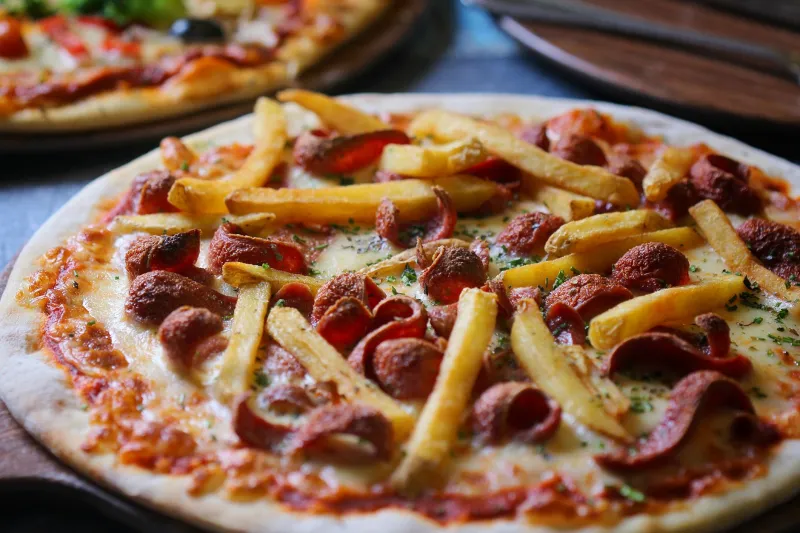
He hit seventeen restaurants across nine states and documented everything — the tikka masala bases that ranged from bright and acidic to deep and smoky, the paneer preparations that varied wildly by region, the unexpected toppings that reflected local food cultures blending into the Indian-pizza framework. A spot in Memphis had a pizza with tandoori-spiced pulled pork. A place in Albuquerque was working with green chile and chaat masala in a combination that, by all logic, should not have worked as well as it did.
"That's the thing about this fusion," Derek says. "It's not precious. It absorbs wherever it lands."
What the Restaurants Are Building
For the chefs and owners running these spots, the food tourist phenomenon is both flattering and a little surprising. Many of them opened their restaurants to serve their local communities first. The idea that someone would drive six hours specifically to eat their pizza is still something most of them are getting used to.
But the smarter operators are starting to lean into it. Some are building social media presences that speak directly to the road-tripper audience — detailed posts about sourcing, process content that shows the kitchen at work, behind-the-scenes looks at new menu development. Others are creating experiences around the visit: tasting flights, chef's table events, limited-release specials that give travelers a reason to come back.
The culinary tourism economy around Indian pizza is still small compared to, say, barbecue trail culture in the South or wine tourism in Napa. But the infrastructure is forming. Food writers are publishing destination guides. Regional tourism boards are starting to notice. A few cities have quietly begun including Indian pizza spots in their official food tourism marketing.
The Road Ahead
What's driving all of this, at its core, is pretty simple: people are hungry for food experiences that feel genuinely new. Indian pizza delivers that in a way that's accessible without being dumbed down. It's familiar enough — it's still pizza — but layered with flavors and techniques that most American diners haven't fully explored yet.
The road trip is a perfect vehicle for that kind of discovery. You're already in an adventurous headspace when you're traveling. You're willing to try things you might hesitate over at home. And when you pull off the highway into a strip mall in a city you've never visited and sit down to a pizza that tastes like nothing you've ever eaten before, the whole journey suddenly makes complete sense.
The spice route and the open road have always had something in common: they both go somewhere worth going. Right now, a lot of them are going to the same place.