Heartland Heat: Why the Midwest Is Quietly Becoming America's Most Exciting Indian Pizza Scene
There's a moment in every food trend's life when the coasts stop being the whole story. Craft beer did it. Korean barbecue did it. And now, if you pay close enough attention, Indian pizza is doing it too — and the place it's happening fastest isn't Brooklyn or Silver Lake. It's Columbus. It's Kansas City. It's the stretch of the country that food media spent decades flying over.
Something genuinely interesting is brewing in the Midwest, and it has everything to do with the specific conditions that make smaller American cities such fertile ground for culinary experimentation right now.
The Setup Nobody Expected
To understand why cities like Detroit, Indianapolis, and Omaha are producing some of the country's most inventive Indian pizza, you have to think about what those cities actually have going for them — not what they're missing.
Affordable commercial kitchen space means a young chef with a vision doesn't need a Wall Street backer to open a restaurant. A cost of living that doesn't crush employees means kitchens can actually retain talent long enough to develop something coherent. And perhaps most importantly, established South Asian immigrant communities — many of them tied to universities, healthcare systems, and tech corridors — provide both a built-in customer base that knows the food and a network of suppliers who've been quietly stocking Indian pantry staples for decades.
The result is a scene that doesn't feel like a trend chasing itself. It feels like something that grew from the ground up.
Columbus, Ohio: A Case Study in Community-Driven Fusion
Columbus doesn't get enough credit as a food city, full stop. But talk to anyone working in its restaurant scene and they'll tell you the same thing: this is a place where people actually eat adventurously, partly because Ohio State pulls in students from everywhere, and partly because the city's South Asian population — one of the fastest-growing in the Midwest — has created real demand for food that reflects their actual lives.
That means pizza that doesn't treat Indian flavors as a gimmick. Chefs here are building menus around concepts like the dhaba — those roadside eateries along Indian highways where truckers and travelers eat intensely spiced, deeply satisfying food. Translate that sensibility onto a pizza and you get something that's unapologetically bold: charred crusts loaded with tarka-finished dal, caramelized onion, and a hit of raw green chili that sneaks up on you three bites in.
Local sourcing plays a huge role too. Ohio's agricultural output gives chefs access to things like fresh methi (fenugreek greens) from farms serving the region's South Asian grocery market, or locally grown hot peppers that can be dried and ground into something that approximates Kashmiri chili powder without the import price tag. The pizza that comes out of that kind of sourcing has a regional character you simply can't replicate in a city where everything arrives on a truck from a national distributor.
Kansas City's Smoky Surprise
Here's where it gets really interesting. Kansas City has a barbecue culture so deeply embedded in its civic identity that it borders on religious. And it turns out that the low-and-slow, smoke-heavy approach to meat that defines KC 'cue has some genuinely surprising chemistry with Indian spicing.
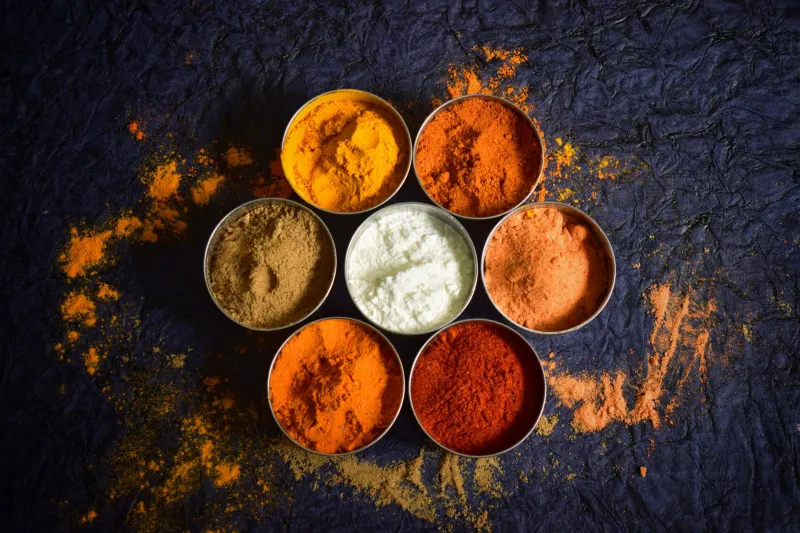
A handful of chefs in the city have started leaning into that overlap hard. Think pulled lamb shoulder that's been rubbed with a blend of dried mango powder, smoked paprika, and cumin, slow-cooked until it falls apart, then piled onto a pizza finished with a tamarind-based glaze that does the same sweet-sour-smoky work that a good Kansas City sauce does on ribs. It's not gimmicky. It's actually logical — both traditions are obsessed with layering smoke and spice and fat in ways that make meat taste like the best version of itself.
The chefs doing this work aren't trying to be clever. They're cooking from the places they're actually from, which in several cases means both India and Kansas City, because that's their biography. First-generation Americans who grew up eating both, and who got tired of treating those two parts of their food memory like they had to stay separate.
Detroit's Dough Revolution
Detroit-style pizza — that thick, crispy-edged, rectangular slab baked in a blue steel pan — has had its national moment. But Detroit's Indian pizza chefs have found something in that format that nobody else has quite figured out: the deep, caramelized crust edge of a Detroit-style pie is almost structurally identical to the crust on a good paratha, and it handles bold, oily toppings without getting soggy in a way that thin-crust pizza simply can't.
Chefs in Detroit are using that architecture to build pizzas that would overwhelm a Neapolitan base. A saag paneer topping — creamy, intensely spiced, loaded with moisture — sits beautifully on a Detroit-style crust because the pan-fried bottom can take the weight. Add a ring of browned cheese that crisps against the pan edge, and you've got something that feels both entirely Indian and entirely Midwestern at the same time.
Why This Matters Beyond the Food
The Midwest Indian pizza scene is doing something culturally meaningful that's worth naming directly. These restaurants aren't exoticizing Indian food for a curious white audience, and they're not sanitizing it for mass appeal either. They're building spaces where South Asian diners can see their food treated with the same seriousness and creativity that Italian-American cuisine has always received in this country — and where everyone else gets to come along for the ride.
That's a different kind of fusion than what the word usually implies. It's not a chef who read a lot of cookbooks deciding to put tikka masala on a flatbread. It's communities that have been here for decades, building something that reflects where they actually live and what they actually eat.
The Coastal Food Media Is Starting to Notice
For a while, you could be forgiven for thinking the heartland Indian pizza scene was a local secret. But food writers from both coasts have started making pilgrimages — showing up in Columbus and Kansas City the way they used to show up in Nashville when hot chicken was just getting started. The restaurants getting written about aren't trying to be the next big thing. They're just cooking really well, and the food world is finally catching up.
Which, honestly, is how the best food movements always work. Not a press release and a viral moment, but a slow accumulation of really good meals eaten by people who tell other people who eventually can't stop talking about it.
The Midwest has been cooking this way for a while now. The rest of us are just getting the memo.