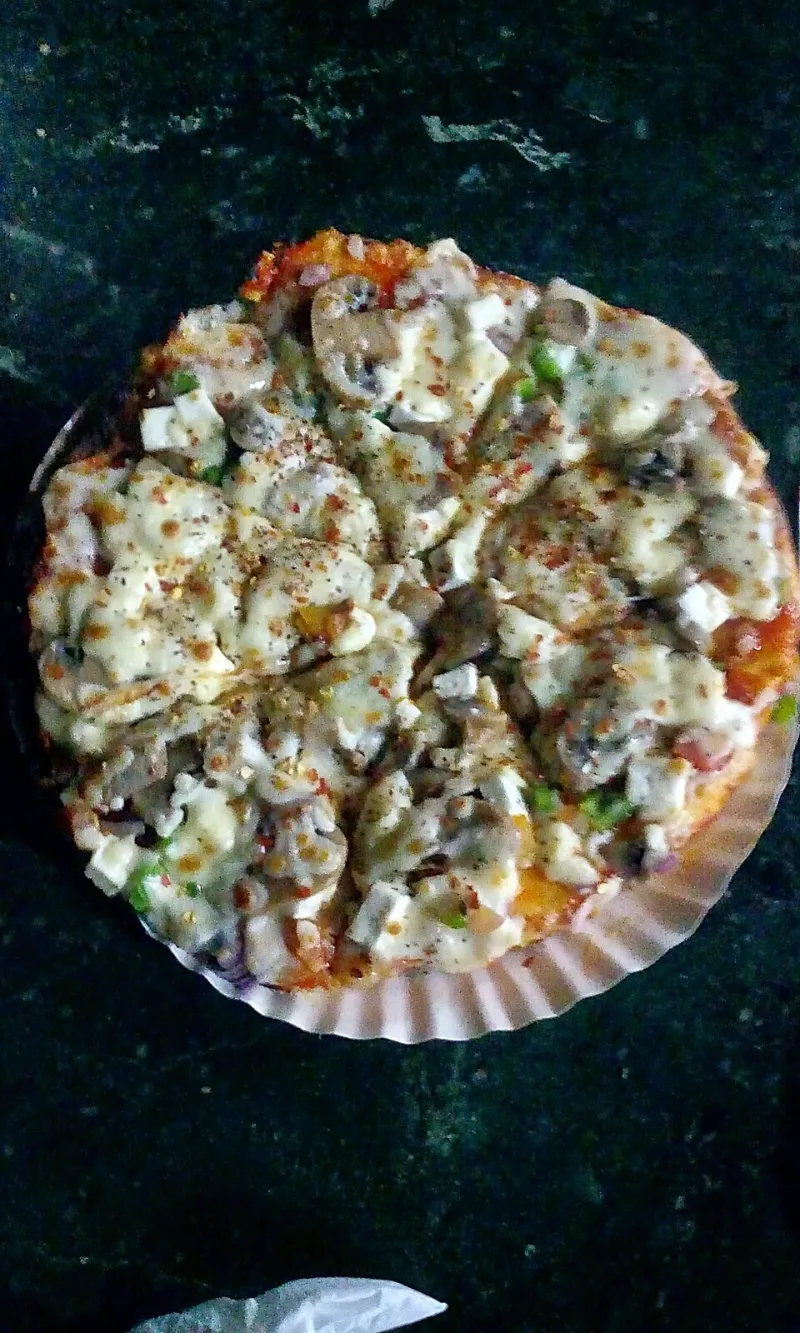
Forget Everything You Know About Pizza Dough: The Indian Flour Revolution Is Here
Photo: Akshar1234, CC BY-SA 4.0, via Wikimedia Commons
Let's be honest about something: Western pizza orthodoxy has a bit of an ego problem when it comes to dough.
Mention swapping out 00 flour for whole wheat atta in certain pizza circles and you'll get the kind of reaction usually reserved for suggesting that New Yorkers fold their slices the wrong way. Bring up yogurt fermentation instead of a classic yeast starter and someone will dramatically invoke the Vera Pizza Napoletana association. Add ghee to the mix and, well, good luck.
Here's the thing, though: the people quietly ignoring all of that orthodoxy are making some of the most interesting pizza dough in America right now. And they're doing it by drawing on a bread-making tradition that's arguably just as ancient, just as technically sophisticated, and just as flavor-forward as anything Italy ever produced.
Indian pizza dough is not a compromise. It's an upgrade. Let me explain.
The Flour Question: Why Atta Changes Everything
Atta flour—the whole wheat flour used to make roti, paratha, and chapati across South Asia—is a fundamentally different ingredient than the refined 00 or bread flour that anchors traditional pizza dough. It's stone-ground, it retains the wheat germ and bran, and it carries a naturally nutty, slightly earthy flavor that refined flour simply can't replicate.
When you use atta as part of your pizza dough blend (most Indian pizza bakers work with a mix rather than going 100% atta, which can make the dough dense), a few interesting things happen. The crust develops a more complex, wheaty backbone. It browns differently—deeper, more golden, with a toasty quality that complements spiced toppings in a way that a neutral white crust never quite does. And the texture, when done right, lands somewhere beautifully between chewy and tender.
Some bakers are also experimenting with besan (chickpea flour) blends, which bring a protein-rich, slightly nutty character to the dough and create a crust that's crispier and more structurally interesting. A small addition of rice flour—common in South Indian baking—can produce a crackly, almost cracker-like exterior that holds up brilliantly under wet, saucy toppings.
This isn't dumbing down pizza dough. It's adding vocabulary.
The Fermentation Factor: Naan's Secret Weapon
Here's where things get genuinely fascinating from a food science perspective. Traditional naan dough is fermented with yogurt. Not commercial yeast, not a long-rise sourdough starter—yogurt. The live cultures in plain, full-fat yogurt (the good stuff, not the sweetened American variety) act as a leavening agent while simultaneously acidifying the dough, which does two very important things.
First, the acid breaks down gluten strands in a way that creates a more tender, extensible dough—easier to stretch, less prone to snapping back. Second, that mild tanginess becomes a flavor note in the finished crust that you can't get from yeast alone. It's subtle, but it's there, and it makes the crust taste like something rather than just a neutral delivery vehicle.
Several Indian pizza makers in the US have adapted this technique for their doughs, using a yogurt-and-water mixture in place of some or all of the water in a standard recipe, sometimes alongside a small amount of commercial yeast for a more reliable rise. The result is a dough that ferments faster than a traditional cold-proof, develops a gentle tang, and produces a crust with noticeably more character.
"I tried explaining the yogurt thing to a chef friend of mine who trained in Naples," says Vikram Patel, a home baker in Chicago who documents his Indian pizza experiments online. "He was skeptical. Then he tasted it. He didn't say anything for a while, which I took as a win."
Ghee: The Fat That Changes the Game
In Western pizza dough, olive oil is the fat of choice—and for good reason. It adds suppleness, flavor, and helps produce that characteristic chewy-yet-crisp texture. But swapping in spiced ghee? That's a different conversation entirely.
Ghee—clarified butter that's been cooked until the milk solids caramelize—has a higher smoke point than olive oil and a deeply rich, nutty flavor that intensifies with heat. When worked into pizza dough, it creates a crust that's extraordinarily flaky and tender, almost laminated in quality, with a richness that stands up confidently to bold toppings like tikka masala or vindaloo.
The "spiced" part is where Indian pizza makers take it further. Infusing ghee with whole spices—cumin seeds, black cardamom, a cinnamon stick—before incorporating it into the dough introduces aromatic layers that weave through every bite without announcing themselves loudly. You don't necessarily think "cardamom" when you eat the crust. You just think: this tastes extraordinary and I want more of it.
This is exactly the kind of subtle, technique-driven flavor building that separates good cooking from great cooking, regardless of cuisine.
Why the Orthodoxy Needs to Relax
The deeper issue here is a cultural one. Pizza dough orthodoxy—particularly the Neapolitan strain—carries real authority, and that authority has genuinely protected something valuable. The Vera Pizza Napoletana certification exists because industrialization threatened to turn a living culinary tradition into a cheap imitation of itself. That's worth protecting.
But there's a difference between protecting a tradition and treating it as the only legitimate form of an idea. Pizza, at its core, is a flatbread with toppings. Flatbreads with toppings have existed across virtually every culture on earth for thousands of years. The Indian subcontinent has its own extraordinary flatbread traditions—roti, naan, paratha, kulcha, uttapam—that are just as technically refined and culturally significant as anything from Naples.
When Indian pizza makers incorporate atta flour and yogurt fermentation into their doughs, they're not corrupting a tradition. They're bringing their own equally ancient, equally sophisticated bread-making heritage to the table and asking it to have a conversation.
That conversation is producing some remarkable results.
The Home Kitchen Opportunity
The best news about all of this is that Indian pizza dough is genuinely accessible for home bakers. Atta flour is widely available at Indian grocery stores across the US and increasingly at mainstream supermarkets. Full-fat plain yogurt is everywhere. Ghee—once a specialty item—now sits comfortably on the shelves at Whole Foods, Trader Joe's, and countless other retailers.
The learning curve isn't steep. The biggest adjustment for bakers used to traditional pizza dough is understanding that atta-blended doughs behave slightly differently—they may feel a little stickier, they'll absorb liquid at a different rate, and they benefit from a slightly shorter bake at a slightly higher temperature.
But once you've pulled a ghee-brushed, yogurt-fermented, atta-blended crust out of a screaming-hot oven and tasted what it does under a layer of spiced toppings, you're going to have a very hard time going back to plain all-purpose.
The subcontinent has been perfecting its flatbreads for a very long time. It turns out it had a few things to teach the pizza world. And the pizza world—slowly, deliciously—is starting to listen.