Bold, Borderless, and Booming: Why Indian Pizza Is America's Next Big Food Obsession
Photo: Gannu03, CC BY-SA 4.0, via Wikimedia Commons
Something is happening in American dining rooms, food halls, and delivery apps, and it's louder than the usual seasonal trend cycle. Diners across the country are actively seeking out food experiences that feel genuinely new — not just a new restaurant, but a new category of eating. And right at the intersection of two of America's most beloved culinary traditions — Indian food and pizza — a movement is gaining real momentum.
This isn't a gimmick. It's not a social media stunt. Indian pizza, as a concept and as a dining experience, is having a cultural moment that's been building for years. And if you want to understand why it's hitting differently right now, you have to look at the bigger picture.
The Fusion Dining Boom: A Little Context
Fusion cuisine has always existed in America — this is, after all, a country whose entire food identity is built on cultural collision. But the version of fusion that dominated the 1990s and early 2000s often felt forced: a lemongrass-infused pasta here, a teriyaki burger there. It was novelty for novelty's sake, and diners eventually saw through it.
What's different now is that the fusion happening in 2024 is driven by authenticity rather than gimmick. The chefs behind the most exciting cross-cultural restaurants today are people who grew up eating from both traditions — who have a genuine personal stake in making the combination feel honest. The result is food that doesn't feel like a mashup so much as an evolution.
Jessica Nguyen, a food culture analyst based in Los Angeles, put it well in a recent interview: "The new fusion isn't about taking two things and smashing them together. It's about finding the places where two culinary philosophies naturally overlap, and then building something new in that space. Diners can taste the difference."
Indian pizza lives squarely in that philosophy. The two cuisines share more than most people realize — a love of slow-cooked tomato bases, the central role of bread, an obsession with layered aromatics. The fusion feels earned.
What the Pandemic Changed About American Eating
You can't talk about the current state of American food culture without acknowledging what the pandemic did to it. Those years of restaurant closures, home cooking experiments, and global cuisine delivery apps fundamentally shifted how Americans relate to food.
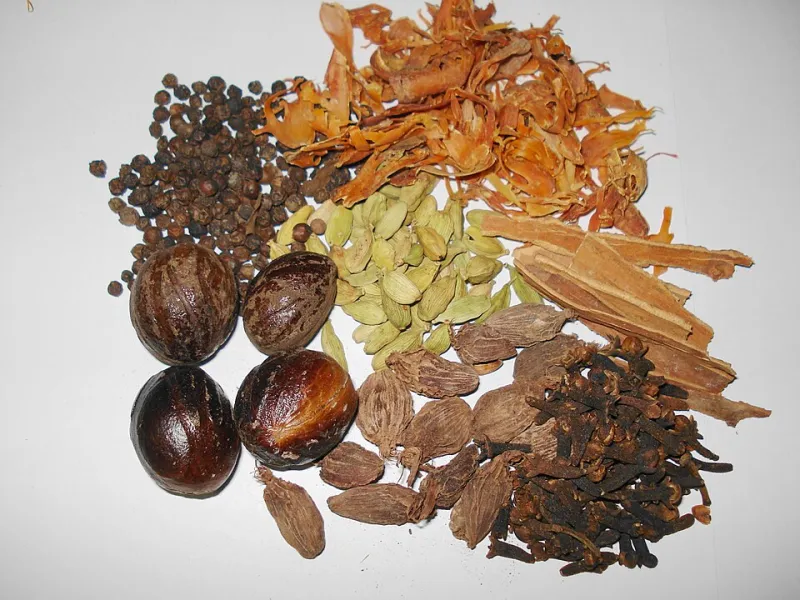
First, they cooked more — and in doing so, many discovered ingredients and techniques they'd never tried before. Searches for Indian spices on platforms like Google and Amazon spiked dramatically during 2020 and 2021. Garam masala, turmeric, and cardamom became pantry staples in households that had never stocked them before.
Second, when restaurants reopened, diners came back hungry for experiences they couldn't replicate at home. Safe, familiar comfort food had its moment during lockdown — but by 2022, the appetite had shifted toward the bold, the adventurous, and the genuinely surprising. A tikka masala pizza with charred paneer and mint chutney drizzle? That's not something you can easily pull off in your kitchen on a Tuesday night. That's a reason to go out.
Third — and this is the subtler shift — the pandemic accelerated a generational change in dining expectations. Younger Americans, particularly millennials and Gen Z, grew up in a far more culturally diverse food environment than their parents did. For them, a pizza topped with chaat-inspired ingredients isn't weird. It's exciting. It's Tuesday.
Case Studies: Fusion Restaurants Leading the Way
Across the country, a handful of restaurants have proven that the Indian-American fusion model isn't just a concept — it's a viable, scalable business.
In New York City, spots in Jackson Heights and the East Village have been quietly serving Indian-inflected flatbreads and hybrid street food for years, building loyal local followings before the national food press caught on. In Houston — one of the most culinarily diverse cities in the US — Indian-Tex-Mex and Indian-pizza hybrids have found enthusiastic audiences in communities that already eat across cultural lines every day.
In the Bay Area, where tech industry demographics have long supported adventurous eating, several fast-casual concepts have built entire brand identities around Indian-American fusion, attracting venture capital attention and national media coverage in the process.
What these success stories share isn't a single formula — it's a shared understanding that the food has to be genuinely good first, and fusion second. The best Indian pizza restaurants aren't asking diners to be adventurous for the sake of it. They're offering something that's simply delicious, and then letting the cultural story be a bonus.
The Indian-American Community as a Culinary Bridge
One factor that often gets underplayed in these conversations is the role of the Indian-American community itself. With over four million Indian Americans living in the US — concentrated in major metro areas but spread across every state — there's a built-in audience that understands both culinary traditions intimately.
Many of the most innovative Indian-American fusion chefs describe growing up eating both cuisines simultaneously, packing naan and dal for school lunch one day and begging for a Domino's run the next. The fusion they're creating now isn't a professional exercise — it's a personal autobiography.
This authenticity matters to consumers. A 2023 Technomic survey on dining trends found that "chef story" and "cultural authenticity" ranked among the top factors influencing adventurous diners' restaurant choices. People want to know that the food they're eating means something to the person who made it.
Why Pizza Is the Perfect Vehicle
Of all the American food formats that could have become the canvas for Indian fusion, pizza makes the most intuitive sense — and not just because it's ubiquitous.
Pizza is fundamentally democratic. It doesn't come with a lot of cultural baggage or intimidation. You already know how to eat it. You already love it. That low barrier to entry makes it the ideal introduction for diners who might be hesitant to order something entirely unfamiliar.
At the same time, pizza is endlessly customizable. The format — dough, sauce, cheese, toppings, finish — maps almost perfectly onto the structural logic of Indian cooking, which also builds flavor in intentional layers. Swap the marinara for a tikka base, trade the Italian sausage for spiced lamb keema, finish with a cilantro-mint chutney instead of basil — and suddenly you have something that feels both completely familiar and genuinely new.
That combination of comfort and discovery is exactly what today's American diner is looking for.
Where This Is All Headed
The honest answer is that Indian pizza isn't going anywhere — it's going everywhere. As the US continues to diversify, as younger diners continue to drive the conversation about what "American food" actually means, and as chefs from immigrant backgrounds continue to bring their full cultural identities into their kitchens, the boundaries between cuisines will keep blurring.
That's not a threat to either tradition. It's a tribute to both.
At Five Rivers Indian Cuisine Pizza, that's exactly the energy we're building on. The five rivers of Punjab — the Jhelum, Chenab, Ravi, Beas, and Sutlej — have nourished one of the world's great food cultures for millennia. American pizza has fed a nation for over a century. When those two rivers of flavor meet, something worth celebrating flows out.
Pull up a stool. The slice is ready.