Rice on a Pizza? The Wildly Ambitious Chefs Trying to Turn Biryani Into a Slice
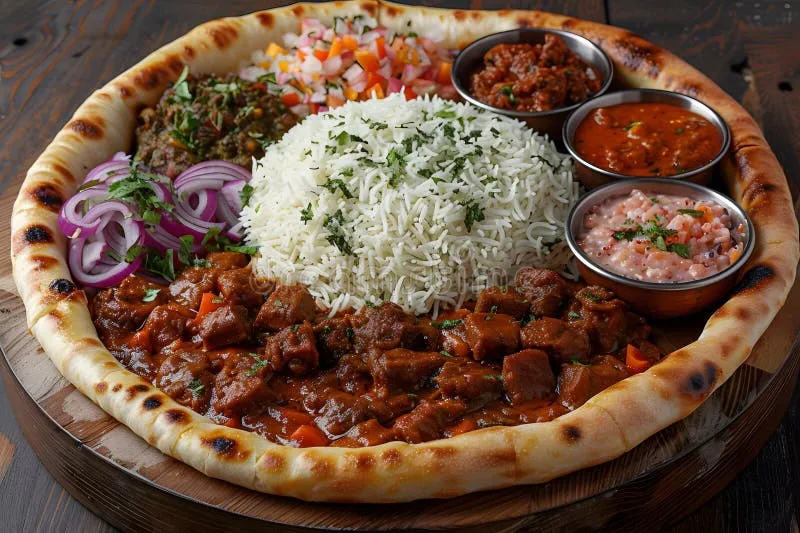
Photo: biryani rice toppings on artisan pizza dough experimental fusion cooking, via thumbs.dreamstime.com
Let's start with the obvious objection, because it deserves to be said out loud: pizza already has a carb. It's the crust. You're standing on it. So putting rice on top of pizza dough feels, at first glance, like a culinary double-down that nobody asked for.
And yet.
Across a small but growing network of experimental pizzerias and Indian fusion restaurants in the US, chefs are doing exactly that — taking biryani, pulao, and other iconic Indian rice preparations and figuring out how to make them work on a baked dough platform. Some of the results are genuinely revelatory. Some are instructive failures. All of them are worth paying attention to, because they're pushing the boundaries of what fusion cooking can actually accomplish.
Why Biryani? Why Now?
Biryani isn't just a rice dish. It's an event. A properly made biryani — whether it's the slow-cooked Hyderabadi dum style, the fragrant Lucknawi variety, or any of the dozens of regional interpretations across the subcontinent — involves layered cooking, carefully balanced spice profiles, and a kind of controlled steam environment that develops flavors over hours. It's one of the most technically demanding preparations in Indian cooking.
So why would any sane chef try to translate that onto pizza dough?
Partly because biryani's flavor profile is genuinely extraordinary — saffron, whole spices, caramelized onions, tender protein, and that particular combination of savory and floral that makes it one of the most craveable dishes on the planet. Those flavors don't belong exclusively to rice. They belong to the cooking technique and the spice architecture, and in theory, that architecture can be rebuilt on a different foundation.
Partly, too, because biryani is one of the most recognized Indian dishes in the American market. When you're building a fusion concept, working with ingredients and flavor profiles that diners already love — and love deeply — gives you a significant head start on acceptance.
The Technical Problem Nobody Warned You About
Here's where things get complicated. Rice and pizza dough have fundamentally different moisture relationships with heat.
Pizza dough, especially in a high-heat oven, is doing the opposite of what cooked rice wants to do. The crust is losing moisture rapidly, developing crunch and char. Cooked rice, when exposed to the same environment, either dries out and becomes unpleasantly hard, or — if it's been cooked with too much moisture — turns the dough soggy and prevents proper crust development. Getting these two textures to coexist on the same baking surface is genuinely tricky.
Chefs working on this problem are taking a few different approaches. Some are par-cooking the rice to a very specific doneness — slightly underdone, with lower moisture content than you'd eat it straight — before using it as a topping. This gives the rice room to finish in the oven without either drying out completely or waterlogging the crust beneath it.
Others are abandoning the idea of whole rice grains on pizza entirely and instead working with what you might call "biryani essence" — a thick, intensely spiced paste made from deconstructed biryani components, spread as a sauce layer rather than a topping. The rice itself gets criped separately and served as a garnish, adding texture without the moisture problem.
A third approach, arguably the most creative, involves pressing cooked biryani rice into a thin layer and using it as the crust itself, baked until it forms a firm, crispy base that carries the spice profile of the dish into every single bite. This one's the most technically demanding, but early reports from kitchens experimenting with it suggest it might also be the most successful.
Flavor Science: What Actually Works
Not every biryani spice profile translates equally well to a baked pizza environment, and understanding why requires thinking about how heat affects aromatic compounds.
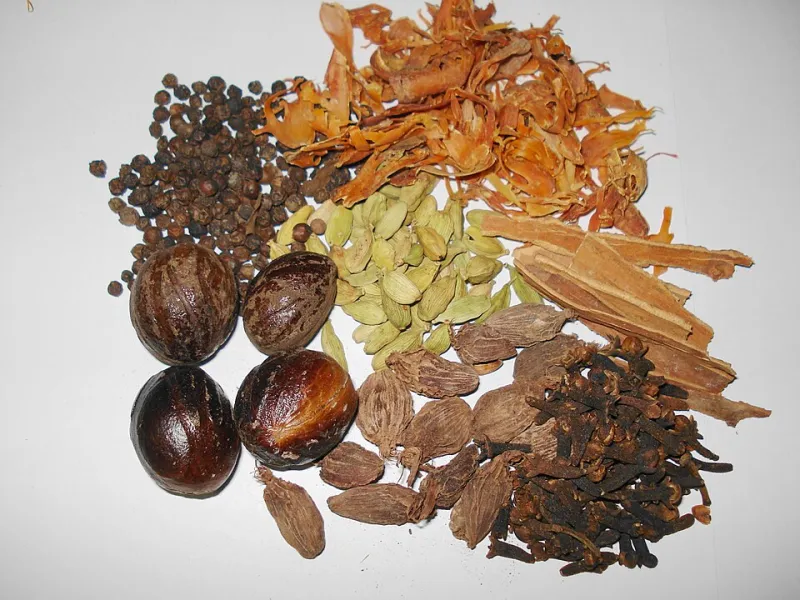
The whole spices that define biryani — cardamom, cloves, cinnamon, star anise, bay leaf — behave differently when they're baked on an open surface versus trapped in a sealed pot with steam. Some of those aromatics, particularly the more volatile floral notes in cardamom, dissipate quickly under direct oven heat. What you're left with is the spice's backbone rather than its full expression.
Interestingly, this can work in your favor. The mellowing effect of oven heat on the more aggressive whole spices creates a flavor profile that's more approachable for American diners who might find a full biryani spice hit a bit intense. The caramelized onion component, on the other hand, absolutely thrives in a pizza oven — the dry heat accelerates the Maillard reaction and deepens those sweet, savory notes significantly.
Saffron, biryani's most iconic and expensive ingredient, holds up surprisingly well as a pizza topping element when it's bloomed in warm cream or butter and drizzled over the finished pie rather than cooked into the sauce. The visual drama of those golden threads against a browned crust is also, frankly, stunning.
Case Studies From the Kitchen
A few concrete examples help illustrate where this concept is actually landing.
One experimental pizzeria in Chicago has been running a weekend special built around a Hyderabadi-inspired lamb biryani pizza. The approach: a thin whole-wheat crust brushed with a saffron-yogurt base, topped with slow-braised lamb that's been cooked using biryani spices, scattered with par-cooked basmati, finished with fried shallots and fresh mint. Early customer feedback described it as "the most interesting thing I've eaten this year" and "confusing in a good way" — which, in the experimental food space, is basically a five-star review.
A California outfit has gone the deconstruction route, building a pizza that captures the idea of pulao rather than its literal form. A fragrant herb oil infused with cumin, coriander, and bay leaf serves as the sauce base. Grilled vegetables that would traditionally be folded into a pulao — peas, carrots, spiced potatoes — become the toppings. A handful of crispy puffed rice goes on after baking as a textural element. It's pulao in spirit, pizza in structure, and it works.
Fusion Frontier or Culinary Overreach?
The honest answer is: both, depending on execution.
The biryani pizza concept, at its worst, is a gimmick — a novelty that prioritizes the pitch over the plate. Rice on dough, spiced carelessly and assembled without technical rigor, produces something that satisfies neither the pizza lover nor the biryani devotee. The sum is less than its parts, and diners can tell.
But at its best? This is genuinely exciting cooking. It forces chefs to understand both culinary traditions at a deep level, to think hard about what makes each dish work, and to make deliberate choices about what to preserve, what to transform, and what to leave behind. That kind of creative pressure produces some of the most interesting food in American restaurants right now.
At Five Rivers, we've always been drawn to the places where culinary traditions collide and create something new. The biryani pizza paradox — too carby, too complex, too ambitious — is exactly the kind of challenge that makes fusion cooking worth following. Whether it becomes a permanent fixture on menus across the country or remains a beloved experiment for the adventurous few, it's already proven one thing: Indian cuisine and pizza have more to say to each other than anyone initially imagined.