Brick, Mortar, and Masala: How Indian Pizza Is Finally Earning Its Own Street Address

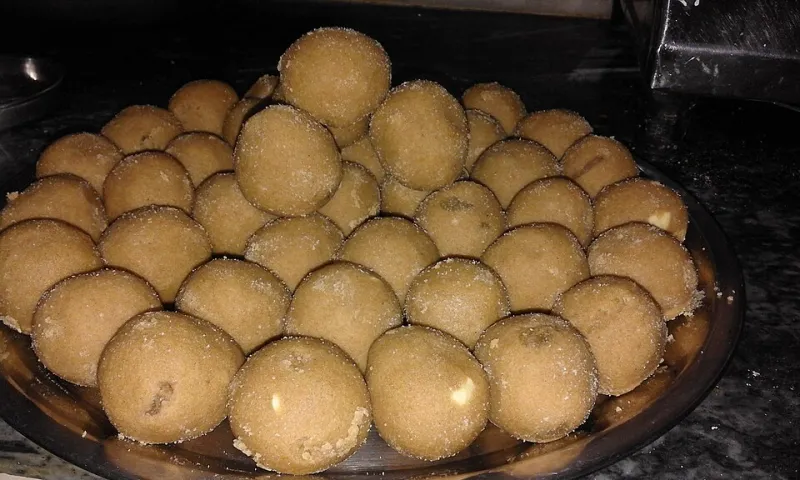
Photo: Michael Gäbler, CC BY 3.0, via Wikimedia Commons
Walk through almost any major American food hall built in the last five years and you'll find it: the Indian-fusion pizza stall. It's usually wedged between a Korean barbecue counter and an artisan ice cream concept, doing brisk lunch business from a menu printed on a chalkboard. The pizza is fantastic. The line is real. And then, come 8 p.m., the lights go off and the whole operation folds up until tomorrow.
For a long time, that was the ceiling for Indian pizza in America. Not because the food wasn't good enough — it absolutely was — but because the concept hadn't yet cracked the code on something that matters enormously in the restaurant industry: legitimacy. The kind of legitimacy that comes with a front door, a reservations system, and a sign above the window that's there every single day.
That ceiling is cracking. And 2024 into 2025 looks like the moment it finally gives way.
The Food Hall Era: Incubator or Dead End?
It would be unfair to dismiss the food hall years. For Indian-fusion pizza operators, the food court and pop-up circuit served a genuinely useful purpose. Low overhead meant low risk, which meant room to experiment. Operators could test a mango chutney base one week and a green chili korma sauce the next without betting the entire business on either one. Foot traffic was built in. And the format attracted exactly the kind of adventurous, food-curious diner who was most likely to give an unfamiliar concept a shot.
But food halls also created a perception problem. Concepts that live exclusively in shared spaces — no matter how good they are — can struggle to signal permanence and seriousness to a broader audience. For many diners, especially in suburban and rural markets where food hall culture is less embedded, a stall in a shared dining hall reads as a stepping stone, not a destination.
"People would love the pizza, come back three times in a month, and then ask us when we were 'opening a real restaurant,'" one Midwest-based operator described in a recent industry panel. "That question used to frustrate me. Now I understand it. They weren't dismissing us. They were telling us they were ready for more."
What Changed: The Confluence of Several Big Shifts
Several forces converged to make 2024-2025 the inflection point that observers have been anticipating.
First, the pandemic-era ghost kitchen boom accelerated something nobody expected: it trained a huge swath of the American dining public to order unfamiliar foods without the social scaffolding of a restaurant environment. When you're ordering delivery at 10 p.m. and you see "tandoori chicken pizza" as an option, there's no awkward moment of not knowing how to pronounce something or feeling unsure about the etiquette. You just click. That frictionless exposure built familiarity at scale.
Second, the mainstreaming of Indian food generally gave Indian-fusion pizza a rising tide to ride. Indian cuisine is now the fourth most popular ethnic cuisine in the United States by restaurant count, and consumer comfort with flavors like turmeric, cardamom, and tamarind has grown substantially even in markets that would have seemed unlikely ten years ago. When a diner in suburban Ohio already knows what tikka masala tastes like, a tikka masala pizza isn't a leap — it's a natural extension.
Third, and perhaps most practically: commercial real estate. The post-pandemic shakeout left a significant number of vacant restaurant spaces in second- and third-tier markets, available at lease rates that made standalone concepts financially viable for operators who previously couldn't have justified the overhead.
The Menu Legibility Problem
Expansion into suburban and rural markets comes with a specific challenge that operators in coastal food-hall environments often underestimate: menu legibility. In a Brooklyn food hall, you can put "saag paneer pizza with methi crust" on a chalkboard and trust that a meaningful percentage of your customer base already knows what saag and methi are. In a standalone restaurant in suburban Indianapolis or outside Raleigh, that same menu item might as well be written in a foreign language for a significant portion of walk-in traffic.
The operators navigating this most successfully are taking a layered approach. They're keeping familiar anchors on the menu — items with names and flavor profiles that require no prior knowledge to understand — while building out from those anchors toward more adventurous territory. "Spicy lamb pizza" is a gateway. "Rogan josh pizza with crispy shallots and mint raita" is where you take a customer once they've walked through that gate.
Descriptive menu language is doing a lot of work here too. Rather than assuming knowledge of Indian culinary terminology, successful standalone operators are writing menu copy that explains the flavor experience: "slow-cooked butter chicken sauce, rich and mildly spiced" rather than just "murgh makhani base." It's not dumbing down the food — it's welcoming diners in rather than gatekeeping them out.
The Suburban and Rural Frontier
Perhaps the most significant signal that Indian pizza has genuinely arrived is where the new standalone openings are happening. The action isn't concentrated in Manhattan or San Francisco anymore. Concepts are opening — and sustaining themselves — in places like Columbus, Ohio; Frisco, Texas; and the greater Nashville corridor.
These markets share some characteristics worth noting. They have growing South Asian diaspora communities that provide an immediate customer base with existing familiarity and emotional investment in the cuisine. They have younger demographics with adventurous eating habits cultivated by social media and food delivery apps. And they have enough of a "new to the neighborhood" restaurant culture that a distinctive concept can generate genuine buzz without competing against decades of established institutions.
The diaspora angle is particularly important and often underappreciated in mainstream food media coverage. Indian-fusion pizza isn't just a novelty concept aimed at novelty-seekers. For many South Asian Americans, it's a food that holds real personal resonance — a way of seeing their culinary heritage reflected in a format that feels fully American. That emotional connection translates into loyalty, word-of-mouth, and the kind of community investment that sustains a restaurant through its difficult early months.
What Comes Next
The operators who've made the leap from food hall to standalone are almost universally bullish about what the next few years look like. The conversation has shifted from "can this concept work outside a shared space" to "how fast can we open the next location."
There are still real challenges ahead. Staffing kitchens that can execute both Indian culinary technique and pizza fundamentals at high volume is genuinely hard. Supply chains for specialty Indian ingredients in non-metro markets can be unreliable. And building a lunch and dinner customer base simultaneously — rather than the single-daypart food hall model — requires a different kind of operational discipline.
But the trajectory is clear. Indian pizza has served its time in the food court. It's earned its own address. And if the early returns from the new wave of standalone openings are any indication, American diners in markets far beyond the coastal food scenes are ready and waiting to walk through the door.