Flatbread First: The Chefs Throwing Out Pizza Dough and Never Looking Back
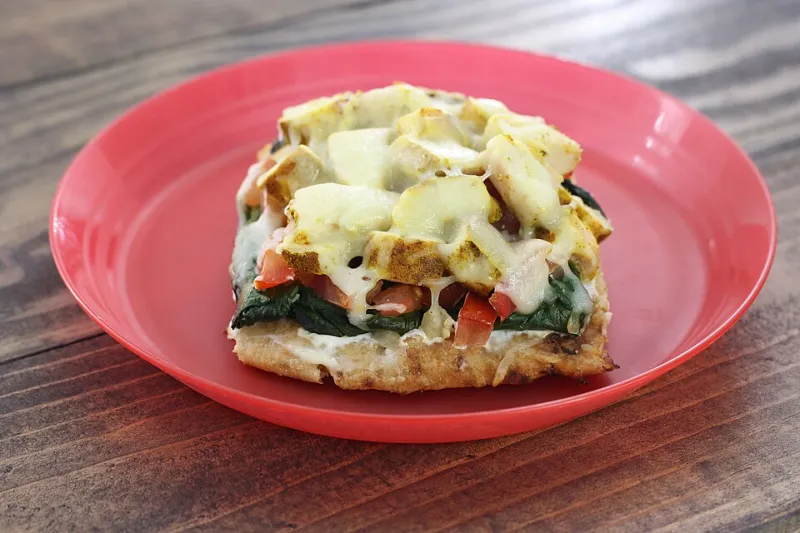
Photo: USDAgov, Public domain, via Wikimedia Commons
Somewhere between a tandoor oven and a pizza stone, a quiet revolution is happening. It doesn't announce itself with press releases or Michelin stars — at least not yet. It shows up on your plate as a slightly blistered, chewy, aromatic base topped with tikka-spiced chicken and charred onions, and your brain does a double-take trying to figure out what exactly you're eating. Is it a pizza? Is it an Indian flatbread with toppings? Does it matter?
For a new generation of Indian-American chefs and restaurateurs, that question is the whole point.
Dough Is Not the Boss of Me
Conventional pizza dough — the yeasted, slow-fermented kind that Neapolitan purists will defend with their lives — has always been treated as non-negotiable. Change the sauce, sure. Swap the cheese, fine. But mess with the dough and you're not making pizza anymore. That's the received wisdom, anyway.
Chef Priya Anand, who runs a small but buzzy counter-service spot in Chicago's Logan Square neighborhood, decided she was done with received wisdom about three years ago. "I spent months trying to get my pizza dough to behave the way I wanted it to," she says. "And then one afternoon I made a batch of naan for a family dinner, put leftover makhani sauce on one, added some toppings — and it was just better. Softer, more flavorful, more interesting. I couldn't unsee it."
Anand started serving naan-based pizzas at her restaurant shortly after. The reaction from customers was polarized in exactly the way she expected. Pizza traditionalists were skeptical. Indian food enthusiasts were intrigued. And a third group — the ones who just wanted something delicious — didn't care about the taxonomy at all. They kept coming back.
What Naan Actually Does Differently
It's worth getting into the specifics here, because the difference between a naan base and a conventional pizza crust isn't just semantic. It's structural, textural, and deeply flavorful in ways that change how a dish eats from first bite to last.
Naan is typically made with maida (a finely milled wheat flour), yogurt, and sometimes milk, giving it a richness and slight tang that standard pizza dough doesn't have. It's cooked at high heat — traditionally against the walls of a tandoor — which creates a char on the outside while keeping the interior soft and slightly chewy. That combination is genuinely different from even the best Neapolitan crust, which tends toward crispness and a more neutral flavor profile.
Paratha, another flatbread entering the conversation, brings something else entirely. Layered with ghee and folded multiple times before cooking, it has a flakiness that's closer to puff pastry than pizza dough. Topped with spiced lamb keema and a drizzle of raita, it becomes something that defies easy categorization — and that's precisely the appeal.
"Paratha as a pizza base sounds like a gimmick until you eat it," says Rohan Kapoor, who operates a fusion pop-up in Austin that's built a devoted following largely through word of mouth. "Then it just sounds obvious. The layers hold sauce differently. The fat content changes how the toppings sit. It's a completely different eating experience."
The Purist Problem
Not everyone is on board, and that's putting it gently. Online food forums and comment sections have not been kind to the flatbread-pizza movement, with critics arguing that calling a topped naan a "pizza" is either culinary confusion or a marketing grab — sometimes both.
There's a legitimate conversation to be had here. Pizza has a specific identity rooted in Italian-American tradition, and that identity matters to a lot of people. Diluting the definition, the argument goes, doesn't celebrate fusion — it just muddies the waters.
But chefs like Anand and Kapoor push back on that framing. "Italian-Americans took something from Naples and made it their own over generations," Anand points out. "That process of adaptation and reinvention is exactly what we're doing. The difference is that we're being upfront about it. We're not hiding the Indian influence — we're centering it."
There's also a historical footnote worth considering: flatbread topped with ingredients and baked at high heat is not an exclusively Italian concept. Versions of it appear across Persian, Turkish, Levantine, and yes, South Asian culinary histories. The idea that pizza dough is the only legitimate vehicle for this kind of cooking is, at minimum, a narrow view.
What American Diners Are Actually Doing
Here's the thing about the purist debate: American diners are largely voting with their stomachs, and the results are telling. Naan-based dishes at Indian-American restaurants routinely outperform their conventional-dough counterparts in reorder rates, according to anecdotal reports from several restaurateurs. Social media engagement skews heavily toward the flatbread options. And delivery platforms are seeing Indian fusion flatbreads climb steadily in search popularity.
Part of this is novelty — people are curious, they want to try something new. But a significant part of it is that naan and paratha are genuinely well-suited to the toppings that Indian-American chefs are working with. The richness of butter chicken, the brightness of green chutney, the heat of a good vindaloo — these flavors need a base that can hold its own. A flavorful, slightly tangy naan does that in a way that a neutral pizza dough sometimes struggles to.
"My regulars don't even think of it as a debate anymore," says Kapoor. "They just know they want the paratha base with the lamb. The category question is something food writers care about. My customers care about whether it tastes good."
A New Category, or Just a New Attitude?
So where does this leave us? Is the naan-pizza a pizza? Is it something else? Should we be coining new terminology — Indian flatbread pie, fusion tava, something else entirely?
Honestly, maybe the more useful question is whether the category label matters as much as the culinary conversation it's opening up. The chefs driving this movement aren't trying to destroy pizza. They're expanding what the format can do, pulling it toward a different cultural tradition and discovering that the two fit together in ways that are genuinely exciting to eat.
At Five Rivers, that intersection is exactly what we're here for. The place where Indian culinary heritage meets the slice — where naan and mozzarella and masala and dough and tradition and invention all share the same table. Whether you call it pizza or something new, the best argument for it is always the same one: take a bite and decide for yourself.
The dough purists can have their say. But the flatbread is already on the menu.