Same Toppings, Completely Different Pizza: How Indian Culinary Logic Is Transforming What You Think You Know
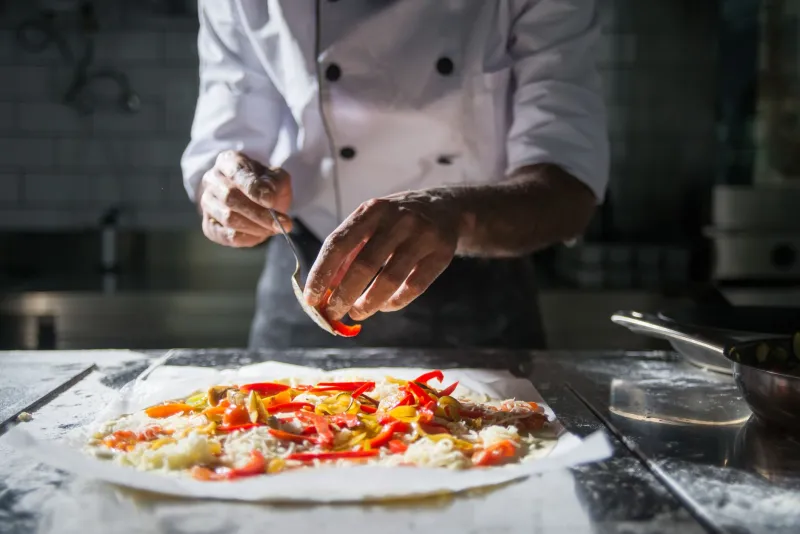
There's a moment that happens at a lot of Indian pizza restaurants across the country — a diner picks up a slice loaded with mushrooms and onions, takes a bite expecting something familiar, and then stops mid-chew. Not because something is wrong. Because something is very right, and they can't quite figure out what it is.
That moment of confusion is basically the entire point.
Chefs working at the intersection of Indian and American pizza traditions aren't just swapping mozzarella for paneer or trading marinara for tikka masala — though that's happening too. The more interesting shift is quieter and harder to spot on a menu. It's happening at the level of technique, philosophy, and the fundamental question of how a topping gets treated before it ever touches dough.
The Tempering Problem Nobody Talks About
In conventional American pizza kitchens, a mushroom is often sliced raw, scattered across a sauced crust, and left to roast in the oven. The result is fine. Familiar. Expected.
Now ask a chef trained in Indian culinary tradition what to do with that same mushroom, and you'll get a different answer almost immediately. Tempering — the practice of blooming whole spices in hot oil until they crackle and release their essential compounds — changes the mushroom before it ever sees an oven. Cumin seeds, a dried red chili, maybe a few mustard seeds: they hit the oil first, and then the mushrooms go in. The fungi absorb that spiced fat at the cellular level. By the time they land on a pizza, they're not just cooked mushrooms. They're transformed mushrooms.
"The oil carries the spice into the ingredient," explains one chef who runs an Indian pizza concept in Chicago. "You're not seasoning the surface. You're seasoning the interior. That's a fundamentally different thing."
It's a distinction that sounds almost philosophical until you eat the result, and then it makes complete, immediate sense.
What Happens to Onions
Onions might be the topping where the Indian approach creates the most dramatic departure from American expectations. On a standard pie, onions are often added raw or barely caramelized — they contribute a mild sweetness and a little bite. Pleasant enough.
But in Indian cooking, onions are infrastructure. They're the foundation of countless dishes, cooked down slowly with ginger, garlic, and spices until they essentially dissolve into a deeply savory base. Some chefs are bringing that same patience to their pizza prep, slow-cooking onions with whole spices and a pinch of asafoetida until the result is something closer to a condiment than a vegetable — intensely sweet, almost jammy, with a complexity that reads as umami-rich even though no meat is involved.
Drop that on a pizza and suddenly the onion isn't a supporting player. It's doing structural flavor work that holds the whole slice together.
Bell Peppers Get a Second Life
Bell peppers have a reputation problem in American pizza culture. They're the topping people tolerate, the thing you order when you're trying to feel virtuous. Rarely anyone's first choice.
Indian culinary logic doesn't see it that way. Capsicum — as it's known across the subcontinent — shows up in sabzis, biryanis, and street-food preparations where it's treated with actual respect. Charred quickly over high heat with a little chaat masala and a squeeze of lime, the pepper develops a smoky, tangy character that feels nothing like the soft, slightly sweet strips you've had on American pies.
One chef in the Bay Area has been roasting bell peppers in a tandoor-adjacent setup before finishing them with dried mango powder and a whisper of black salt. The result is a topping that hits multiple flavor notes simultaneously — acidic, smoky, slightly sulfurous in the best possible way — and makes the pepper feel indispensable rather than optional.
"People who say they don't like bell peppers on pizza," she says, "haven't had bell peppers prepared this way."
The Sausage Question
This is where things get genuinely complicated, and genuinely interesting. A significant portion of Indian cuisine is vegetarian by tradition, which means Indian pizza chefs working with meat toppings are often approaching them from outside a deep cultural familiarity with, say, Italian-American pork sausage.
That outsider perspective turns out to be an advantage. Without the assumption that sausage should taste a certain way, chefs are free to rethink it entirely. Some are making lamb kheema — seasoned ground lamb with whole spices, green chiles, and fresh coriander — that functions as a sausage analog but tastes like nothing else on the American pizza landscape. Others are working with chicken tikka as a topping protein, marinated in yogurt and spice blends and cooked in high-heat ovens until charred at the edges.
The underlying principle is the same one driving every other transformation on this list: don't treat the ingredient as a given. Treat it as a canvas.
Layering Is the Real Secret
If there's one concept that unifies everything happening in this corner of the culinary world, it's layering. Indian cooking is obsessed with building flavor in stages — tempering at the start, adding aromatics at different points in the cooking process, finishing with fresh herbs or acidic elements that brighten everything at the end.
American pizza, by contrast, tends to be assembled in one moment and cooked in one go. Everything goes on together, everything cooks together.
Chefs who are blending these traditions are essentially importing the Indian idea of sequential flavor development into a format that traditionally doesn't have room for it. That might mean a topping that gets cooked twice — once before assembly, once in the oven — or a finishing drizzle of something acidic and herbaceous that gets added right before service. It might mean a base sauce that's been built in layers rather than simply blended.
The pizza looks the same. The experience of eating it is completely different.
Why This Matters Beyond the Trend Cycle
It would be easy to frame all of this as a food trend — Indian pizza is having a moment, chefs are getting creative, here are some interesting examples. But that framing misses something important.
What's actually happening is a genuine collision of two sophisticated culinary traditions, each of which has centuries of accumulated knowledge about how to make food taste better. When those traditions meet at the level of technique rather than just ingredients, the results aren't just novel. They're often better than either tradition would produce on its own.
A mushroom treated with Indian tempering logic and then baked on a well-made crust is a more interesting mushroom than either tradition produces alone. A slow-cooked onion base brings depth that American pizza rarely achieves. A charred, chaat-spiced bell pepper makes the case for a topping that's been underestimated for decades.
None of this requires exotic ingredients or a culinary degree to appreciate. It just requires a willingness to take a familiar slice and ask: what if we thought about this completely differently?
The chefs already have the answer. You just have to take a bite.